Showing posts with label library. Show all posts

Wednesday, December 11, 2013

-20.4-

I will blog about many things, including our Waiting for Godot trip, but for now I'll show this:


My Mom originally showed me this and explained some of the context of the authors, especially how Joyce loves to play with words (She also said that Joyce was a quiet man, and wouldn't act like this at all.)
Today, after STAC when we were watching the clips of Beckett plays, I now get that the close-up of Beckett's lips is referencing his play "Not I!

Sunday, November 3, 2013

-15.4-


Part 2:
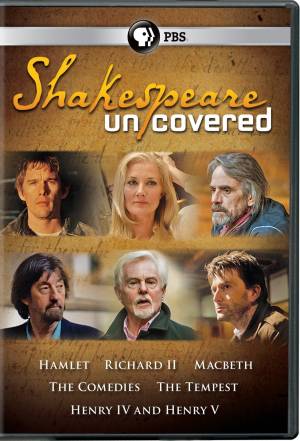
While staying at a family friend's house in Seattle, I watched two Shakespeare documentaries.

Henry IV/V:
I watched henry IV/V documentary in Seattle to make up for missing the airing of the actual Henry IV (pt 2), and I loved it.

The film gave great context for both plot and film techniques (the fact that Jeremy Irons narrated the film was a plus, too!). It talked about the writing behind the play, and filming behind the scenes bits of the Hollow Crown. (It amazed me to see how much background noise there was before editing.)

The film introduced some interesting creative concepts. For example, Shakespeare broke a STAC rule by having a disclaimer at the beginning of Henry V - He apologized for not being able to have many set changes, so the audience would have to use their imagination for when scenes changed to more ambitious settings!
...Conversely, Shakespeare followed a STAC rule by stealing the French Bishop's speech.

The ardour of the Shakespearian researchers and actors fascinated me. I have mixed feelings about Shakespeare, but seeing these people talk so enthusiastically about Shakespeare made me enjoy the documentary even more. I found Shakespearian acting very interesting...In a way, the actors are physical scholars - they debate the meaning of the plays academically, then put their collective interpretation on stage to the judgment of the audience. The age of the play also put into context English history with American history. The play happened hundreds of years before Shakespeare's time, and Shakespeare was hundreds of years before the Revolutionary War was even fought!

The last scene of the documentary addressed the theme of how futile war is. In Henry V, the poor fight the battles of the king, and take enormous losses; France is conquered, then in the next generation everything gained is lost. "Have we really moved on?" Mr. Irons asks, as he walks through an Arlington-like grave in France.
Although a bit off-topic from the plays, I thought this message was very powerful. It really connected Shakespeare to the world at large.

Richard II:
I went in reverse order, since Richard II, Henry IV, and Henry V are a trilogy, and I slightly regret doing that, since Richard II gave even greater context to the Henry IV/V documentary.

I was fascinated before with the contrasting appearance of the three kings, especially the pure look of Richard II, and the documentary provided me with the explanation of Richard II's, which made me even more interested in this elusive character.
The documentary portrays Richard II as a king who believed he was actually from God. The director chose to have Richard behave as if he was a saint, as if he was above humanity. From the few clips I have seen from Richard II, I must say that the Mr. Whishaw pulled the character off excellently! An added bonus is that Mr. Whishaw acted in Cloud Atlas, a STAC film from last year! His character as Richard II seems to be quite a contrast with the composer character from Cloud Atlas...

I do admit, the second half of the documentary was a bit drier, but I found the introspection into the King's character most interesting. As I've said, I loved both of the documentaries, and I really must watch the Hollow Crown!

-14.4-

It's been a while, but when I went college visiting to Seattle last month, I added a lot to my library. I experienced my first overnight stay at a college, and I remembered how much I loved the climate, and the nice blend between urban and natural beauty Seattle has to offer.

I was also exposed to very interesting TED talks, and Shakespeare documentaries on the plane, and during my stay.

Part 1
TED talks:
On the ride to and from Seattle,

TED: Beyond Looks
This short talk provided an interesting look into the lives of models. The model here talked about how she thought it was so odd how girls want to have an occupation where they just need to look pretty, instead of having an occupation where they could be a "ninja cardio-thoracic surgeon poet."

TED: Fashion Lesson
This fashion designer went into the culture of fashion, and how their lax copyright laws allows for innovation and competition. I thought this was an interesting, since I'm a supporter of the protection of intellectual property. The video also goes into the positives of copying! (Something we've discussed a lot in STAC.) The most interesting part of the video was that the idea of free copying made others strive to make something so unique that no one would be able to copy it (ex. where all those crazy fashion designs come from!)

TED: Learn to read Chinese with Ease!
In this TED talk, a basic chinese lesson is taught (with radicals). I knew the concept before, but the way ShaoLan incorporates humor into an educational lesson -the part where two women characters together symbolizing the character for argument made me smirk- impressed me.

TED: Elusive Creativity
The author in this TED talk discusses a very interesting concept on genius. When she introduced the topic, she talked about how people asked her if she'd ever create another best-seller. This is how I feel about my animation (after the great piece I made in 10th grade, I haven't had any tremendous ideas, which scares me), so this talk touched me on a very personal level.
The author talks about the origins of genius. A "genius" was actually a familiar, or muse, that lived in creative people's homes and helped them with works of art. Only recently has the word "genius" been attributed towards the person themselves. The author connected this to the pressure "geniuses" face because of this re-alignment in association, and why "geniuses" often become mad and suicidal.
The concept of allowing yourself times of lethargy was very different for me, but I do agree with the author in that you still try and create work during these flatline times, until your muse decides to pitch in again.

Saturday, November 2, 2013

-13.4-

Yesterday I watched the documentary These Amazing Shadows. The documentary was about the National Film Registry.

It was fascinating to see how the whole project started; One man bought all of MGM's films and started to colour them, which caused a lot of controversy. Famous stars and filmmakers protested the film in court, which led to the creation of the National Film Registry. I found it interesting how important it was to keep the original films black and white...I could see why, when they showed some clips of It's a Wonderful Life in colour; I didn't recognize what movie the clip was until the original black and white version was played!

The vague criteria and diversity of films to select impressed me. Only 25 films are selected each year, and films have to be 10 years old. Besides that, everything is free game (I remember one interviewee said the people to make up the criteria were brilliant for making the instructions so vague.) The documentary presented many types of videos that were admitted for various reasons from one of the first films to test sound, Gus Visser and his Singing Duck, to modern art films such as Koyaanisquatsi. I was especially happy that they made a special tribute to animated films admitted, since I mostly hear people looking down upon animation. The fact that the Rocky Horror Picture Show was admitted was very amusing to find out, too.

The diversity of the films also attracted many different interest groups. There was a section discussing African-American groups promoting the film The Birth of a New Nation to be admitted, to represent how the KKK affected history. Another part discussed the role of women in films...one interviewee said that almost half the silent movies were written by women! It was also very interesting to find out that abortion was discussed in an early movie, since society seemed so conservative at the time...
(Some historical films were simply awful. Not only was "Duck and Cover" admitted, but another short was admitted that was even worse! The film encouraged people to paint their houses nicely, in efforts to protect themselves from atomic bombs!)

With all of the clips from movies admitted, I also found out about new films (ex. Daughters of Dust), and reminded of movies I need to watch (ex. Bladerunner). I also was reminded how magical film is; I'm not quite familiar with the science behind film, but the thought of moving pictures just appearing on a certain type of plastic is simply astounding.
With all of the clips from movies admitted, I also found out about new films (ex. Daughters of Dust), and reminded of movies I need to watch (ex. Bladerunner).  The fact that all of the films shown were American-made is amazing. It makes me feel proud that the USA has produced a prolific amount of amazing cinematography.  The movie is a must for cinephiles!

Saturday, September 28, 2013

-11.3-

Assignment: Search at least 3 words that you like in a google search. Share a link that interests you.

Attempt 1: I searched "science, paper, craft" and was lead to this link. A periodic table paper craft! But...the website didn't explain what the varying heights of the elements represented...perhaps its electronegativity (I see Flourine is 4.0 and it's EN value is 4.0.)?

I hadn't really thought about it, but using paper craft as learning tools could be a fun way to teach science. It's easy for students to make, and is extremely interactive. Now that I'm thinking about it...I remember making DNA mobiles in 7th grade. That was fun, and I still remember what parts of the mobile represent!

Attempt 2: Since papercraft is really one word, I googled "
An Atlantic article came up (one of my favorite magazines) so I had to click on it!

http://www.theatlantic.com/video/archive/2013/01/one-kids-sci-fi-short/267320/

One man wrote, directed, and animated a science fiction short at the age of 22 (I don't see why the age matters). The plot of the film is simple, machines fighting against man, but I liked the twist at the end (Slight spoilers here: the ending was painful, since you know a catastrophe is going to happen.) What really amazed me was that one person animated the entire short. The level of detail in the animation was incredible. The article said that it took him 7 months to animate 5 minutes of film. Drawing upon my experience at self-animating, that's a short amount of time!

Sunday, September 22, 2013

-7.4-

I'm the public relations officer of Herrick's GSA, so this weekend I was making a poster to hang in the cafeteria.
This led me to search up colors that attract the eye, and I came across an interesting study by Standford: Link

The study showed that color choice results in the creation of tone, and noticeability. For example, "before and after" ads often have dark, neutral colors in the before section and bright, hot colors in the after section (the after section also incorporates more white space).

The most interesting thing I found about this article was that energy bars mostly use blue and brown hues. I thought energy bars would want to use bright colors to emphasize feelings of alertness, but it turns out that the darker hues symbolize health, appealing "to the lifestyle choices that energy bar users might make." The advertisers focused on the long-lasting effects of the energy bar rather than short-term effects.

We can certainly incorporate this into the STAC crowdfunding we're planning!

Friday, September 13, 2013

-3.4-

When I came home, I still had a headache, so I took a nap, and put on some background noise  in the form of listening to episodes of Welcome to Nightvale. Before I drifted off to sleep, I realized that there were a lot concepts that could be stolen, and that I should blog about this. I also thought the concept was very interesting and wanted to share it with everyone.


Welcome to Nightvale is a podcast in the format of a (fictional) radio newscast. The news covers various events in the desert town of Nightvale, USA, and is divided into two parts with a musical "weather" forecast as a interlude.

Events in Nightvale are more than slightly off-kilter; hooded figures and angels wander around the town, a "glowcloud" is a member of the high school PTA, and many odd events are hushed up by "the sheriff's secret police,"...the casual tone of the show's host only brings out the show's eccentricity. The podcast also parodies aspects of our daily life such as the "word from our sponsors" ("That word... is carp!"-Episode 7) It's amusing and slightly creepy at the same time.

The music is excellent. The style of both the background music and "weather" song fits the strange tone of the podcast.

This show is enjoyable for those who like something out of the ordinary that's slightly sarcastic, slightly creepy, slightly humorous, slightly quirky, and slightly Orwellian.
I'd really like to steal the idea of creating fictional news. I also like how simple the podcast is. The cast is composed of one person, the show's host, and I imagine this makes production relatively fast. Definitely doable.

Official website
Soundcloud Official Playlist

Marketing: Surprisingly, the podcast is free. However, the company have a store on their website, and links to other books they have produced.
When looking at the website, I saw that they sell tickets to live shows (I never knew they had live shows before!) And they're in NY! I'm not sure if we'd be able to sell tickets to STAC live...perhaps a special event?