I believe the Shakespeare workshop, taught by James III, was my first pure acting workshop in STAC. I enjoyed it, but felt a little shy because I'm not usually an 'acting' person.
As I discussed when writing about the Shakespeare documentaries, Shakespeare IS about debating the meaning of the work, and presenting your results on stage, but it's also about making sure the audience can see your actions (it's also about getting used to speaking in iambic pentameter.)
During this workshop, we mainly focused on making our actions big (as if people in another room had to see us present Shakespeare.)
Before the workshop, we all chose a sonnet (it couldn't be the more popular sonnets). I chose sonnet LXV (65) because I thought the rhythm of the words was calming.
After warming up and introducing ourselves, we reviewed how the iambic pentameter sounds, then read the first line of our sonnets in this way. For some, breaking down the syllables was a bit harder than others, but we all managed to say our lines smoothly.
Next, we focused on action. We chose words in the sonnet that stood out to us, then thought about actions that suited each word. When comfortable, we silently performed the actions, then added sound effects to the action.
I was used to focusing on action, rather than getting into the mind-frame, from Luke's acting advice, but yesterday was different since we had a physical "script" to act from.
Acting individual words out of context seemed a little strange to me, but when people started to present their sonnet to the group; the actions fit the meaning of the sonnet!
After the initial performance, James started to go over making movements bigger (be big because you can always pull back if needed), and adding in context. For example, Brian's sonnet was directed towards a love intrest, so James had one of the girls stand next to him, and the rest of the guys stand up, so Brian had actual people to refer to while acting. Since many people had sonnets that involved antithesis, James encouraged them to emphasize the differences in order to get the meaning across even clearer.
When I went, I was nervous, but I tried to speak clearly and with the iambic pentameter in mind (people before me had some trouble with destressing words commonly stressed. The night before I didn't have time to go over the meaning of the sonnet, so I acted blindly. It went all right, and after we discussed the meaning of the sonnet (although time erodes everything, I hope my love for you in this letter withstands time). Without meaning to, I emphasized the meaning of "rocks impregnable"by pausing before doing my action for rock (James said the pause interrupted the rhythm, showing how even the words were stopped by the strength of the metaphorical stone.)
After I went, we ran out of time, so we recapped what we went over. While recapping, I began to think about how hard acting Shakespeare is. There are many ways of approaching it, and it's easy to get caught up in your approach to acting. However, when it was my turn, almost everything went blank. I suppose in the end it's as Charlie Parker says: "Then you practice, practice, practice. And then, when you finally get up there on the bandstand, forget all that and just wail."
Showing posts with label Shakespeare. Show all posts
Showing posts with label Shakespeare. Show all posts
Saturday, November 9, 2013

Sunday, November 3, 2013
-15.4-
Part 2:
While staying at a family friend's house in Seattle, I watched two Shakespeare documentaries.
Henry IV/V:
I watched henry IV/V documentary in Seattle to make up for missing the airing of the actual Henry IV (pt 2), and I loved it.
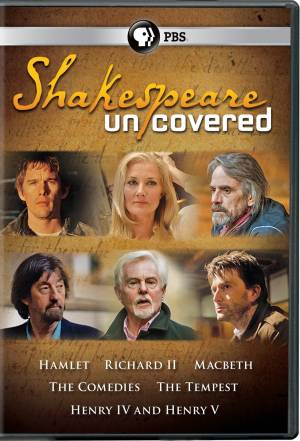
The film gave great context for both plot and film techniques (the fact that Jeremy Irons narrated the film was a plus, too!). It talked about the writing behind the play, and filming behind the scenes bits of the Hollow Crown. (It amazed me to see how much background noise there was before editing.)
The film introduced some interesting creative concepts. For example, Shakespeare broke a STAC rule by having a disclaimer at the beginning of Henry V - He apologized for not being able to have many set changes, so the audience would have to use their imagination for when scenes changed to more ambitious settings!
...Conversely, Shakespeare followed a STAC rule by stealing the French Bishop's speech.
The ardour of the Shakespearian researchers and actors fascinated me. I have mixed feelings about Shakespeare, but seeing these people talk so enthusiastically about Shakespeare made me enjoy the documentary even more. I found Shakespearian acting very interesting...In a way, the actors are physical scholars - they debate the meaning of the plays academically, then put their collective interpretation on stage to the judgment of the audience. The age of the play also put into context English history with American history. The play happened hundreds of years before Shakespeare's time, and Shakespeare was hundreds of years before the Revolutionary War was even fought!
The last scene of the documentary addressed the theme of how futile war is. In Henry V, the poor fight the battles of the king, and take enormous losses; France is conquered, then in the next generation everything gained is lost. "Have we really moved on?" Mr. Irons asks, as he walks through an Arlington-like grave in France.
Although a bit off-topic from the plays, I thought this message was very powerful. It really connected Shakespeare to the world at large.
Richard II:
I went in reverse order, since Richard II, Henry IV, and Henry V are a trilogy, and I slightly regret doing that, since Richard II gave even greater context to the Henry IV/V documentary.
I was fascinated before with the contrasting appearance of the three kings, especially the pure look of Richard II, and the documentary provided me with the explanation of Richard II's, which made me even more interested in this elusive character.
The documentary portrays Richard II as a king who believed he was actually from God. The director chose to have Richard behave as if he was a saint, as if he was above humanity. From the few clips I have seen from Richard II, I must say that the Mr. Whishaw pulled the character off excellently! An added bonus is that Mr. Whishaw acted in Cloud Atlas, a STAC film from last year! His character as Richard II seems to be quite a contrast with the composer character from Cloud Atlas...
I do admit, the second half of the documentary was a bit drier, but I found the introspection into the King's character most interesting. As I've said, I loved both of the documentaries, and I really must watch the Hollow Crown!
Subscribe to:
Posts (Atom)