Sunday, May 18, 2014
-30.4-

Sunday, May 11, 2014
-29.4-


Sunday, May 4, 2014
-28.4-

I first saw commercials for The Illusionist when it was in theaters, but I hadn't had a chance to see it until now.
The film was beautiful, and I liked the quietness of it. But...I felt like I couldn't quite connect to the story. Part of it was that the leading girl looked older than I expected her to, and that made it hard to gauge her relationship with the Illusionist at first. (It also may have been because I had little sleep the night before. I'll have to re-watch it.)
Things to steal:
-Color palettes of the various cities
-The scene where the Illusionist was crowded on a boat with all of the sheep
-A shot of the leading girl and her love interest exiting the shop (the sidewalk was slanted)

-A shot of the leading girl first meeting the Illusionist. The Illusionist could barely be seen through the open doorway


Saturday, April 19, 2014
-27.4-

I liked the movie, but it isn't one many people would like since it's very slow paced (about the speed of The Stationmaster), and had only one semi-fast action scene. There was a lot to analyze, and many allusions made, but the movie gave a very thoughtful look into the concept of eternal life. I'm not a fan of the current vampire genre, but this movie definitely didn't have sparkles. The vampires seemed more like erudite drug addicts than anything else.
The differences between the two main characters was my favorite part of the movie. The man, Adam, took eternal life as boredom and focused on the past (he stayed shut inside and used old technology). He saw people as "zombies" and wasters of the future. Alternatively the woman, Eve, viewed eternal life more positively. She had an iPhone, and seemed a bit more social with others (There was a nice scene where she chides Adam saying something along the lines of, "you could spend all this time helping others than thinking about yourself.")
Other aspects that stood out to me were the first scene, the darkness, and the humor. In the first scene of the movie, there was a cross dissolve between Adam, Eve, and a record playing. As the record went around and around, the actual sound in the theatre moved in a circular motion (Another decision to think about when directing!)
Other scenes that amazed me were scenes of the night sky (since the characters were vampires, the whole thing took place during the nighttime). I kept wondering how they shot those scenes, or if those scenes were CGI.
Even though all of the scenes were shot at night, and the movie had a serious tone, I was pleasantly surprised that there were quite a few humorous scenes. They balanced out the metaphorical bleakness in the lives of the characters and reminded the audience that the movie was fictional.
I'd definitely see the movie again, but I'd need to be in the mood to see it since it is in a slower style.
Sunday, April 13, 2014
-26.4-
Directing Dalmation by Conrad Bishop was my first time directing a play. Before this, I was used to directing film (for both STAC and Chinese class), and the differences seem to me to be quite large. Theatre directing felt as if I was directing for a single shot that we had only one take to do, and I felt like I was repeating myself a lot.
What went right:
-Ashley and Grace were able to hit the important lines (and didn't point it out if they skipped a line)
-People laughed
-Most of the main actions were hit
What went wrong:
-I'm not sure if a dynamic really occurred between the actors...but I can't remember the actual performance that well since it was so quick and I was so (?) worried
-A significant action was skipped (Grace was supposed to push items off her desk and walk up so she was shouting in the audience's face)
-We all should have gotten off the script sooner (I ended up not even bringing it to rehearsals)
-Memorizing the script was an issue. We should have spent a day to break down the main points of the script and focused on memorizing then improvising around those main points
--We utilized the recording technique of rehearsing, and we should have started doing this sooner in order to get off the script sooner
-We should have taken more advantage and practiced more in the main STAC room space (we only had one rehearsal there, and half the cast/one person was missing)
-There are many ways of rehearsing (recording+only actions, only dialogue, recalling memorization+dialogue, improvising), and I felt like I should have stuck to one instead of experimenting
-It was a little worrisome when the day before rehearsal half of the cast wasn't in
-I should be more confident/firm when directing, and have done more physical examples of what I wanted the actors to do
What escaped me this time:
-How to create a dynamic between the actors (?)
-How to hit the key points of both action + dialogue
-How to talk about motivation behind the actions
Sunday, February 23, 2014
-25.4-
1. Competed for a scholarship at McDaniel college
2. Visited the American Visionary Arts Museum (in which I saw ok folk art and some cool mechanical art)
3. Planned and partially filmed a music video with friends (filming in public places such as the Highline was exciting!)
4. Became frustrated at iMovie's limitations
5. Rediscovered my love for Shimejis
Sunday, February 16, 2014
-24.4-
Being Bloomberg, the documentary focused on the business side of Chipotle especially on how the chain brands itself as having "food with integrity."

The most interesting part for me, however, was the Chipotle's advertising campaign. Chipotle mainly seems to gain advertising through word-of-mouth and brand loyalty, but they've started to expand in the ad industry. The documentary showed clips of an animated short Chipotle created on the subject of letting farm animals run free; the short went on to winning movie awards and was even played in cinemas+TV! The documentary also mentioned a new mini-webseries in the works that follows the lives of characters who work jobs in the promotion of fast food/packaged foods. I found the concept of the highly multi-media advertising campaign open up new possibilities for advertising. I wonder if it'll work?
Wednesday, January 22, 2014
-23.4-

-22.4-
Shakespeare:
We moved on from Sonnets to small scenes. The actors that were in the musical did their scenes from The Taming of the Shrew, and the rest of us did small scenes or monologues from The Tempest.
Before all that, we did an interesting exercise on "O's." I think doing the warm ups was my favorite part of the workshop, but this was my favorite exercise.
For the exercise, we got a card with an emotion on it. We had to say "O" with that emotion, while the others guessed what we were acting out. I liked it a lot, because you could say "O" with such emotion that you could probably hold a conversation with someone just by saying "O!"
A similar exercise was when we said a line from a Shakespeare play in different ways. We all got a line, then James told us how we should say it ("Say it like there's a baby in the room, and if you wake it up, it will never stop crying!") I enjoyed both warm-ups. It was fun to really put yourself into your emotions.
Back to the Shakespeare. The people in the musical worked on a Shakespeare scene, and I was put into one of the Tempest scenes with Emily and Lex. We read through a couple times, and got the general part, since James explained it to us beforehand, but some details of the scene confused us (What is a moon-calf?)
Finally, we both presented. I tried really hard to let go, and I was happy that the others watching us got the plot (a success)!
Overall, it was an enjoyable workshop. I felt even closer to the "actors" in STAC, and I learned that sometimes you need to let go and focus on the feelings behind the words instead of the actual words themselves.
Friday, January 3, 2014
-21.4-

Maybe the director was influenced by Kontroll?
Wednesday, December 11, 2013
-20.4-
My Mom originally showed me this and explained some of the context of the authors, especially how Joyce loves to play with words (She also said that Joyce was a quiet man, and wouldn't act like this at all.)
Today, after STAC when we were watching the clips of Beckett plays, I now get that the close-up of Beckett's lips is referencing his play "Not I!
Monday, December 2, 2013
-19.4-
On channel 13 they are showing a program, "Broadway Shows: A Jewish Legacy."
At one point, the people on the show were talking about how the making of "Fiddler on the Roof." The writers were having trouble making the show more relatable. They asked a director for help, and he kept asking the writers, "What is the show about?" The writers kept describing the plot, until one guy said "Tradition!" The director approved.
From this snippet, I was reminded of our discussion in STAC regarding what a piece "is," and what a piece is "about." It's funny how sometimes it's hard to see what an art piece is "about," even in the professional world.
Saturday, November 30, 2013
-18.4-
I've never visited the film building on a college tour (sadly, most of the college tours opted to show the football field instead of the art buldings) and the first thing I saw was a huge (about my chest height), old-fashioned, camera from the early movies. It got me excited, because I've only seen those in "The Artist," and "Hugo."
 |
| It looked something like this |
Although the camera was only for display, a film major showed me some old technology that still was in use.
Like the photography class in Herricks, the Denison film class starts with the basics before going digital: they shoot and develop film with traditional techniques.
I haven't paid much attention to traditional film making, but seeing all of the different machines people had to use gave me a new appreciation for how quickly we are able to shoot and edit film today! For example, the film major took me to a room where an old film editor was. She gave a brief overview of the process, and mentioned how hard adding sound was to the movies (Most graduates used the machine for silent films, because adding sound was that hard!)
Although I'll probably stick with digital, it was fascinating to see how people had to film in the older days.
http://denison.edu/get-to-know-denison/cinema-house
Saturday, November 9, 2013
-17.4-
I attended "Great Shorts 2" last year, and was looking forward to another great viewing of short films, and I was disappointed.
...Ok, I was only a little disappointed, but that was because there weren't any animated shorts (last year I remember seeing a few really creative ones.)
The shorts had extremely interesting concepts, many of them addressing modern issues. All of the films were realistic, and in a modern setting. I'll do a one-sentence summary and small, three-sentence review since there were a lot of shorts:
THE COME UP: A screen writer's quirky scam in order to get the funds to execute his film.
I wasn't terribly impressed with the plot until the end. The short was a chase scene, which cutely utilized film sets and movie props as weapons, but it didn't seem too original. At the end there was a clever plot twist (the chaser turned out to be the real thief), and this slightly redeemed the short.
THE EXCHANGE: In a world where people trade shares of themselves, an ex-girlfriend takes revenge.
The concept of this film was interesting, but the characters annoyed me; both main characters seemed not to have any redeeming features (the guy only cared about himself, and the ex was very nasty). The end, however, was amusing when the ex bought her boyfriend. I like how she flipped his break-up line "it's not personal, it's business" into "it's not business, it's personal."
DRONE: A military drone operator's morning routine.
The acting and tone of the film was excellent. The film seemed so surreal with the setting of a drone operator working alone in an office contrasted with the setting of his target in a desert thousands of miles away. The acting of the operator was at its peak the moment the drone dropped the bomb; it seemed like a video game, but when the operator started crying you realized the gravity of the situation.
FIRST THE WORST: Two young children debate who has the worst life.
This short was too short. The concept was cute, and the acting from the two kids was amazing. I loved the electricity between them when they were arguing over who had the worst life.
POSTMODERN TIMES: A humorous look at the modern lifestyle of increasingly-omnipresent technology.
I haven't seen the Charlie Chaplin film this short was based off of, and I'd like to. A well-done satire on modern technology...I loved the scene where the woman goes to work in her home office, and has to deal with multiple video chats and telephone calls. The scene where the power goes out, and the woman and her neighbor meet each other in real life was hilarious, yet painful (both were only dressed from the hips-up, since that's the only part visible in webcams.)
THE AUDITION: A short satire about how cut-throat the auditioning process is.
Exaggeration really makes this movie. I really like how the movie comes in a circle, beginning with the woman auditioning as "clipboard woman," progressing into the woman vomiting on command, then ending with the woman introducing herself as "clipboard woman" before leaving. It was hard to watch, but the message was clear.
SEPARATE WE COME, SEPARATE WE GO: A short about a girl and a friendly grown-up bonding.
One of the darker films in the short, the acting in this movie was very good. One of my favorite lines from the whole day was something along the lines of, "A boy in my class wanted to sail to France in a frying pan so he'd be kept warm."The transition from growing up fast, to momentarily regaining innocence was done well.
TIME FREAK: An inventor becomes caught up in the minutiae of daily life...and time traveling.
This short gave time travel a fresh light, which I respect, and I loved the inclusion of humor (the seriousness of the situation becomes insidious with the movie being mainly humorous). The acting was great, the actor of time traveller character really got across the transition from a slightly nerdy guy, to an OCD mad scientist. The ending came up a little short, however, because the character of the friend is now stuck in the past since he convinces his friend to not build a time machine (but I suppose it's believable, since he did make a snap judgement.)
SUDDEN DEATH!: Two scientists must battle a disease that causes sudden singing and dancing, while dealing with their true feelings of affection.
This film was hilarious in that it was a mock musical (it vaguely reminded me of Dr. Horrible), however the plot was a little confusing. The film felt a little long at times, too. I liked at the end the cast broke off into their ordinary lives before finishing the last line of the song...the sudden jump into reality made the film even more humorous!
---
After the shorts, there was a short discussion with the lady who chose all of the films (there was going to be a Q&A with the directors, but no one showed up). Apparently, anyone can submit shorts! ...Could this be a future project for STAC?
-16.4-
As I discussed when writing about the Shakespeare documentaries, Shakespeare IS about debating the meaning of the work, and presenting your results on stage, but it's also about making sure the audience can see your actions (it's also about getting used to speaking in iambic pentameter.)
During this workshop, we mainly focused on making our actions big (as if people in another room had to see us present Shakespeare.)
Before the workshop, we all chose a sonnet (it couldn't be the more popular sonnets). I chose sonnet LXV (65) because I thought the rhythm of the words was calming.
After warming up and introducing ourselves, we reviewed how the iambic pentameter sounds, then read the first line of our sonnets in this way. For some, breaking down the syllables was a bit harder than others, but we all managed to say our lines smoothly.
Next, we focused on action. We chose words in the sonnet that stood out to us, then thought about actions that suited each word. When comfortable, we silently performed the actions, then added sound effects to the action.
I was used to focusing on action, rather than getting into the mind-frame, from Luke's acting advice, but yesterday was different since we had a physical "script" to act from.
Acting individual words out of context seemed a little strange to me, but when people started to present their sonnet to the group; the actions fit the meaning of the sonnet!
After the initial performance, James started to go over making movements bigger (be big because you can always pull back if needed), and adding in context. For example, Brian's sonnet was directed towards a love intrest, so James had one of the girls stand next to him, and the rest of the guys stand up, so Brian had actual people to refer to while acting. Since many people had sonnets that involved antithesis, James encouraged them to emphasize the differences in order to get the meaning across even clearer.
When I went, I was nervous, but I tried to speak clearly and with the iambic pentameter in mind (people before me had some trouble with destressing words commonly stressed. The night before I didn't have time to go over the meaning of the sonnet, so I acted blindly. It went all right, and after we discussed the meaning of the sonnet (although time erodes everything, I hope my love for you in this letter withstands time). Without meaning to, I emphasized the meaning of "rocks impregnable"by pausing before doing my action for rock (James said the pause interrupted the rhythm, showing how even the words were stopped by the strength of the metaphorical stone.)
After I went, we ran out of time, so we recapped what we went over. While recapping, I began to think about how hard acting Shakespeare is. There are many ways of approaching it, and it's easy to get caught up in your approach to acting. However, when it was my turn, almost everything went blank. I suppose in the end it's as Charlie Parker says: "Then you practice, practice, practice. And then, when you finally get up there on the bandstand, forget all that and just wail."
Sunday, November 3, 2013
-15.4-
-14.4-
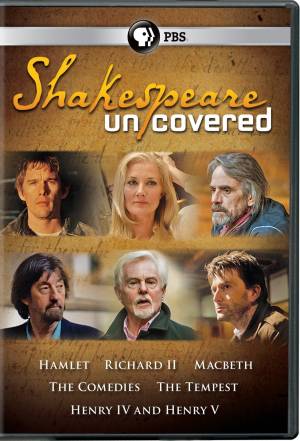
I was also exposed to very interesting TED talks, and Shakespeare documentaries on the plane, and during my stay.
Part 1
TED talks:
On the ride to and from Seattle,


TED: Beyond Looks
This short talk provided an interesting look into the lives of models. The model here talked about how she thought it was so odd how girls want to have an occupation where they just need to look pretty, instead of having an occupation where they could be a "ninja cardio-thoracic surgeon poet."
TED: Fashion Lesson
This fashion designer went into the culture of fashion, and how their lax copyright laws allows for innovation and competition. I thought this was an interesting, since I'm a supporter of the protection of intellectual property. The video also goes into the positives of copying! (Something we've discussed a lot in STAC.) The most interesting part of the video was that the idea of free copying made others strive to make something so unique that no one would be able to copy it (ex. where all those crazy fashion designs come from!)
TED: Learn to read Chinese with Ease!
In this TED talk, a basic chinese lesson is taught (with radicals). I knew the concept before, but the way ShaoLan incorporates humor into an educational lesson -the part where two women characters together symbolizing the character for argument made me smirk- impressed me.
TED: Elusive Creativity
The author in this TED talk discusses a very interesting concept on genius. When she introduced the topic, she talked about how people asked her if she'd ever create another best-seller. This is how I feel about my animation (after the great piece I made in 10th grade, I haven't had any tremendous ideas, which scares me), so this talk touched me on a very personal level.
The author talks about the origins of genius. A "genius" was actually a familiar, or muse, that lived in creative people's homes and helped them with works of art. Only recently has the word "genius" been attributed towards the person themselves. The author connected this to the pressure "geniuses" face because of this re-alignment in association, and why "geniuses" often become mad and suicidal.
The concept of allowing yourself times of lethargy was very different for me, but I do agree with the author in that you still try and create work during these flatline times, until your muse decides to pitch in again.
Saturday, November 2, 2013
-13.4-

It was fascinating to see how the whole project started; One man bought all of MGM's films and started to colour them, which caused a lot of controversy. Famous stars and filmmakers protested the film in court, which led to the creation of the National Film Registry. I found it interesting how important it was to keep the original films black and white...I could see why, when they showed some clips of It's a Wonderful Life in colour; I didn't recognize what movie the clip was until the original black and white version was played!
The vague criteria and diversity of films to select impressed me. Only 25 films are selected each year, and films have to be 10 years old. Besides that, everything is free game (I remember one interviewee said the people to make up the criteria were brilliant for making the instructions so vague.) The documentary presented many types of videos that were admitted for various reasons from one of the first films to test sound, Gus Visser and his Singing Duck, to modern art films such as Koyaanisquatsi. I was especially happy that they made a special tribute to animated films admitted, since I mostly hear people looking down upon animation. The fact that the Rocky Horror Picture Show was admitted was very amusing to find out, too.
The diversity of the films also attracted many different interest groups. There was a section discussing African-American groups promoting the film The Birth of a New Nation to be admitted, to represent how the KKK affected history. Another part discussed the role of women in films...one interviewee said that almost half the silent movies were written by women! It was also very interesting to find out that abortion was discussed in an early movie, since society seemed so conservative at the time...
(Some historical films were simply awful. Not only was "Duck and Cover" admitted, but another short was admitted that was even worse! The film encouraged people to paint their houses nicely, in efforts to protect themselves from atomic bombs!)
With all of the clips from movies admitted, I also found out about new films (ex. Daughters of Dust), and reminded of movies I need to watch (ex. Bladerunner). I also was reminded how magical film is; I'm not quite familiar with the science behind film, but the thought of moving pictures just appearing on a certain type of plastic is simply astounding.
With all of the clips from movies admitted, I also found out about new films (ex. Daughters of Dust), and reminded of movies I need to watch (ex. Bladerunner). The fact that all of the films shown were American-made is amazing. It makes me feel proud that the USA has produced a prolific amount of amazing cinematography. The movie is a must for cinephiles!
Sunday, October 20, 2013
-12.4-
Part 1
Reference:
Clothing:
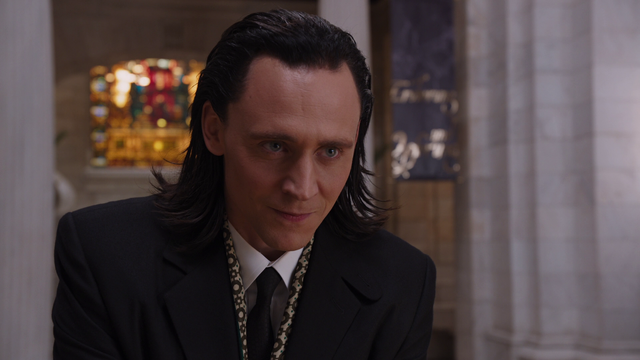
For the outfit, I didn't have a lot to finish. I cut my hair, styled it (learning how to use a straightening iron was nerve-wracking) and bought a zip-up tie (what a fascinating invention!)

Sceptre:
Last time I posted, only the blades were completed. I searched for an extendable pole, and found either an extendable hanger reacher, or an extendable utility pole. I decided on the utility pole, since it was hollow. I also ordered a blue emergency light for the sceptre's energy source. When everything came in, the pole had three sections, so I only used two. I also cut a hole in the plastic on one end of the pole, so the light fit snugly inside.


Complete!:


Saturday, September 28, 2013
-11.3-
Attempt 1: I searched "science, paper, craft" and was lead to this link. A periodic table paper craft! But...the website didn't explain what the varying heights of the elements represented...perhaps its electronegativity (I see Flourine is 4.0 and it's EN value is 4.0.)?
I hadn't really thought about it, but using paper craft as learning tools could be a fun way to teach science. It's easy for students to make, and is extremely interactive. Now that I'm thinking about it...I remember making DNA mobiles in 7th grade. That was fun, and I still remember what parts of the mobile represent!
Attempt 2: Since papercraft is really one word, I googled "
An Atlantic article came up (one of my favorite magazines) so I had to click on it!
http://www.theatlantic.com/video/archive/2013/01/one-kids-sci-fi-short/267320/
One man wrote, directed, and animated a science fiction short at the age of 22 (I don't see why the age matters). The plot of the film is simple, machines fighting against man, but I liked the twist at the end (Slight spoilers here: the ending was painful, since you know a catastrophe is going to happen.) What really amazed me was that one person animated the entire short. The level of detail in the animation was incredible. The article said that it took him 7 months to animate 5 minutes of film. Drawing upon my experience at self-animating, that's a short amount of time!